
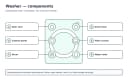
If a washer is not draining, cancel the cycle, unplug it, and check for a rinse-hold setting, unbalanced load, kinked drain hose, backed-up standpipe, or a user-accessible pump filter. Never open a filter full of water without using the manual's emergency-drain method. Persistent humming, leaks, or electrical symptoms need service.
Quick answer: If a washer is not draining, cancel the cycle, unplug it, and check for a rinse-hold setting, unbalanced load, kinked drain hose, backed-up standpipe, or a user-accessible pump filter. Never open a filter full of water without using the manual's emergency-drain method. Persistent humming, leaks, or electrical symptoms need service.
Before you start
| Item | What to expect |
|---|---|
| Tools | Towels, shallow pan, flashlight, gloves, and the model manual; wet/dry vacuum only if its instructions allow |
| Time | 15–60 minutes for external checks |
| Difficulty | Moderate; stop if access requires cabinet disassembly |
| Safety | Disconnect power before touching hoses or user-service areas; keep electricity and water separated |
Key takeaway: Tools: what to expect — Towels, shallow pan, flashlight, gloves, and the model manual; wet/dry vacuum only if its instructions allow.
Identify the exact model and read its manuals. Photograph the display and note the cycle stage. If laundry met sewage or floodwater, an ordinary wash is not proven sanitization. Follow public-health and fabric guidance; discard contaminated food.
Safety boundary: Unplug the washer before moving it, removing a panel, touching a hose connection, or reaching near the tub. Do not perform live mains testing, defeat a lid or door lock, bypass a fuse or ground, or improvise wiring. Washer work never requires gas-valve service, sealed-refrigeration work, or internal TV-capacitor repair; those are also outside the safe DIY boundary. Stop using the machine for a burning smell, smoke, repeated breaker trips, a hot plug, damaged wiring, or water near any outlet or electrical part. Shut off the water valves if a leak continues. CPSC appliance-recall guidance and NFPA electrical-safety guidance take priority over general troubleshooting.
Manufacturer verification: Model designs, diagnostic procedures, fasteners, hose routing, reset steps, and error indications vary. Find the full model number on the door opening, lid rim, or rear label, then confirm every procedure in that model's owner's manual or the manufacturer's official support site before buying a part or opening the cabinet.
Causes ranked by likelihood
The order below fits common household cases, but installation and symptom timing can change it.
| Cause | How to check | Fix | Difficulty |
|---|---|---|---|
| 1. Cycle setting or interrupted program | Display shows pause, rinse hold, or cancellation; no abnormal sound | Resume or select drain/spin exactly as the manual directs | Easy |
| 2. Kinked or poorly positioned drain hose | Inspect the full external run with power disconnected | Straighten it and restore the specified standpipe height and insertion | Easy |
| 3. Household drain backup | Water rises in standpipe or nearby sink drains slowly | Stop washer use and have the plumbing cleared | Pro only |
| 4. Pump filter obstruction | Manual identifies an accessible filter; flow is slow or pump hums | Use emergency drain, then clean the filter as directed | Moderate |
| 5. Excess suds or overloaded load | Foam remains, load is packed, or machine repeatedly redistributes | Remove items, use an approved rinse, and correct future detergent dose | Easy |
| 6. Drain pump or internal hose fault | External path is clear but pump is silent, noisy, leaking, or ineffective | Arrange model-specific diagnosis and repair | Hard |
Key takeaway: 1. Cycle setting or interrupted program: how to check — Display shows pause, rinse hold, or cancellation; no abnormal sound.
1. Cycle setting or interrupted program
Why it happens: The control cannot always distinguish this condition from a bad part. The practical clue is: Display shows pause, rinse hold, or cancellation; no abnormal sound. Think about the load, detergent, plumbing, or installation change immediately before the problem began.
Check it safely: Make the observation from outside the cabinet. Disconnect power if a hose, foot, filter door, or connection will be touched. Keep hands out of the basket until it is completely still, and never defeat the door or lid lock to watch operation.
Corrective action: The appropriate correction is to resume or select drain/spin exactly as the manual directs. Restore every hose and cover before power is returned. One empty or lightly loaded confirmation cycle is more informative than several full-load attempts.
Difficulty: Easy. This rating assumes dry, ordinary exterior access. Tight spaces, stacked appliances, seized fittings, inaccessible plugs, and uncertain shutoffs raise the risk; use qualified help instead.
2. Kinked or poorly positioned drain hose
Why it happens: Washer symptoms often overlap at this stage. Here, the useful sign is that inspect the full external run with power disconnected. Record sounds and display wording; “it stopped” is less useful than knowing whether it had filled, moved, drained, or accelerated.
Check it safely: Start with controls and visible exterior conditions. If inspection goes beyond that boundary, pause and obtain the service procedure for the exact model. Similar-looking machines can hide fasteners, wiring, and water paths in different places.
Corrective action: Straighten it and restore the specified standpipe height and insertion. Stay present for the next test and keep the shutoff valves accessible. End the test at the first leak, burning odor, hard cabinet strike, grinding sound, or repeated electrical interruption.
Difficulty: Easy. This rating assumes dry, ordinary exterior access. Tight spaces, stacked appliances, seized fittings, inaccessible plugs, and uncertain shutoffs raise the risk; use qualified help instead.
3. Household drain backup
Why it happens: This cause moves higher on the list when water rises in standpipe or nearby sink drains slowly. It moves lower when the washer completes the affected stage normally during a small, balanced test. That comparison helps avoid ordering a part from a symptom alone.
Check it safely: Before checking, remove children and pets from the work area, dry the floor, and ensure there is a safe route to the plug and valves. Use the installation guide's measurements instead of judging hose height, cabinet level, or clearance by eye.
Corrective action: Stop washer use and have the plumbing cleared. Do not combine this change with detergent, cycle, and load changes at the same time. A controlled correction reveals whether this cause actually explains the problem.
Difficulty: Pro only. This rating assumes dry, ordinary exterior access. Tight spaces, stacked appliances, seized fittings, inaccessible plugs, and uncertain shutoffs raise the risk; use qualified help instead.
4. Pump filter obstruction
Why it happens: This condition may be intermittent because load weight, water level, and tub movement change through the cycle. Check for the specific pattern: Manual identifies an accessible filter; flow is slow or pump hums. A photo or brief written timeline can make a later professional diagnosis faster.
Check it safely: Observe only with all guards in place. After disconnecting power, inspect the user-accessible area named in the manual and stop if there is damaged insulation, corrosion, a seized fitting, or evidence that water reached electrical parts.
Corrective action: Use emergency drain, then clean the filter as directed. If normal operation returns, inspect again after the test for dampness, movement, or a recurring display. A temporary improvement does not justify ignoring a safety symptom.
Difficulty: Moderate. This rating assumes dry, ordinary exterior access. Tight spaces, stacked appliances, seized fittings, inaccessible plugs, and uncertain shutoffs raise the risk; use qualified help instead.
5. Excess suds or overloaded load
Why it happens: Treat this as a system problem until evidence isolates it. Foam remains, load is packed, or machine repeatedly redistributes. A pump, motor, lock, sensor, and control depend on conditions elsewhere, so replacing the part named by an online search is not a reliable diagnostic method.
Check it safely: Use the least invasive check first and keep the washer unplugged during physical inspection. A stacked unit or one trapped in a closet may require professional moving equipment before even an otherwise simple connection is safely reachable.
Corrective action: Remove items, use an approved rinse, and correct future detergent dose. If that step requires force, cabinet opening, live measurements, or lifting the appliance, it is no longer the same DIY task. Give a technician the model number and the result of the exterior checks.
Difficulty: Easy. This rating assumes dry, ordinary exterior access. Tight spaces, stacked appliances, seized fittings, inaccessible plugs, and uncertain shutoffs raise the risk; use qualified help instead.
6. Drain pump or internal hose fault
Why it happens: This is an important first check because it can imitate a component failure. External path is clear but pump is silent, noisy, leaking, or ineffective. Relate the observation to the exact moment the program changed; cycle timing is stronger evidence than where a puddle, sound, or message was first noticed.
Check it safely: Cancel normally, wait for all motion to stop, and unplug before touching the installation. Use a flashlight and compare the visible arrangement with the model diagram. Photograph it before adjustment. Do not reach through an opening or remove a fixed panel.
Corrective action: Arrange model-specific diagnosis and repair. Change only this condition, then use a short, supervised test permitted by the manual. If the original symptom returns, stop; the failed test is useful evidence rather than a reason to run repeated cycles.
Difficulty: Hard. This rating assumes dry, ordinary exterior access. Tight spaces, stacked appliances, seized fittings, inaccessible plugs, and uncertain shutoffs raise the risk; use qualified help instead.
Brand-specific notes
Front-load LG and Samsung models commonly place a consumer-accessible pump-filter area behind a lower front door on selected models, while many Whirlpool, Maytag, and GE top-load designs do not provide the same user access. Bosch and Electrolux layouts also vary. Never assume a filter location from a video; use the exact manual.
Samsung, LG, Whirlpool, Maytag, GE Appliances, Electrolux, Bosch, and other manufacturers revise machines within a product family. A shared logo or cabinet shape does not establish shared parts. Codes vary by model, so confirm in your owner's manual or the manufacturer's support site. Avoid generic “service mode” button sequences; they can operate components unexpectedly or erase useful history.
Use official support roots to locate documentation: Samsung, LG, Whirlpool, and GE Appliances. Enter the complete model, including suffixes when shown.
When to call a professional
Call a professional if the pump area leaks, the filter cap will not move with reasonable hand force, the machine must be tilted or disassembled, the standpipe overflows, or drainage failure returns after the external path is clear. Grinding may mean a damaged impeller or foreign object. A silent pump can involve the pump, lock, level sensing, wiring, or control, so replacing the pump without testing may waste money.
Ask for a written diagnosis and estimate. Costs vary by model, access, region, and parts availability. Amounts here are approximate US estimates, not sourced quotes. Check the warranty and CPSC recalls.
Choose an appliance technician for internal washer systems, an electrician for a damaged or repeatedly tripping circuit, and a licensed plumber for shutoff, standpipe, trap, or household drain defects. This educational guide does not claim to have inspected the appliance and does not represent verified repair credentials.
Prevention tips
- Empty pockets and close small-item laundry bags before washing.
- Measure HE detergent for load and water conditions rather than filling to the cap.
- Keep the drain hose at the manual's height and do not seal it airtight into the standpipe.
- Clean a user-accessible filter at the stated interval.
- Address slow household drains before they overflow.
Listen for changed sounds, inspect the floor, and act on recurring messages. Do not normalize a symptom because the washer eventually completes.
Frequently asked questions
The FAQ panel on this page answers the most common searches without duplicating those answers here. For any procedure, the exact model manual remains the final authority.
Keep learning
- Back to the Washer Guide
- Related: Washer Not Spinning
- Related: Washer Smells Bad
- Electronics safety basics
Stopping, isolating water, and requesting help is successful troubleshooting when the remaining work involves mains electricity, heavy disassembly, stored energy, or uncontrolled leakage.