
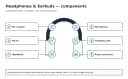
Quick answer: Active noise cancellation (ANC) uses microphones and signal processing to reduce some outside sounds, especially steady low-frequency noise. Fit and passive isolation still matter. ANC is not a substitute for rated hearing protection.
Before you start
- Tools: the product manual, good lighting, a soft dry cloth, and one known-good compatible cable or accessory if relevant
- Time: 15–45 minutes for external checks
- Difficulty: Easy
- Safety: Use moderate volume and take listening breaks. Stop using swollen, hot, leaking, or damaged battery products; do not charge or reuse them.
Back up accessible data before updates. Work on a stable, dry surface and disconnect power before moving cables or removable hardware.
Causes ranked by likelihood
| Cause | How to check | Fix | Difficulty |
|---|---|---|---|
| 1. Microphones sample ambient sound | Identify the model's microphone locations | Keep openings clear using approved cleaning advice | Easy |
| 2. Processing creates opposing signal | Compare ANC on and off at safe volume | Use the documented ANC mode for your surroundings | Easy |
| 3. Best results are steady low sounds | Compare steady hum with sudden voices or impacts | Do not expect all noises to disappear | Easy |
| 4. Fit and passive isolation still matter | Check fit with the maker's supplied tips or pads | Choose a comfortable seal without forcing it | Easy |
Key takeaway: 1. Microphones sample ambient sound: how to check — Identify the model's microphone locations.
1. Check microphones sample ambient sound
Microphones detect ambient sound so the electronics can estimate what reaches your ears. Keep microphone openings unobstructed, using only the manufacturer's approved cleaning method.
2. Isolate processing creates opposing signal
The headphones generate a compensating signal to reduce part of the incoming sound. Check the exact model's ANC and transparency mode settings; the result may differ across environments.
3. Evaluate best results are steady low sounds
Steady engine or ventilation hum is often easier to reduce than sudden sounds or nearby speech. Stay aware of traffic and alarms, and never rely on ANC as hearing protection in hazardous noise.
4. Treat fit and passive isolation still matter as an escalation point
Pads and ear tips physically block some noise even when ANC is off. A comfortable, secure fit can improve the result; replace worn tips or pads with parts approved for the model.
Brand-specific notes
ANC controls, transparency modes, and app options differ by headphone model. Check the maker's manual for supported modes; ANC is not hearing protection.
When to call a professional
Arrange qualified service for a burning smell, smoke, arcing, liquid inside, damaged mains connector, swollen battery, repeated protection shutdown, precision alignment, soldered port, or a fault that requires energized measurements. For valuable data on a failing drive or card, stop writing to it and consult a recovery specialist.
Prevention tips
- Keep vents, optics, contacts, and connector openings clean using the maker's approved method.
- Avoid cable strain, impact, moisture, extreme temperatures, and unsupported chargers or adapters.
- Maintain backups before faults occur and record stable settings before updates.
- Inspect lithium batteries regularly; retire damaged or swollen packs without charging or reuse.
Related help
- Back to Headphones & Earbuds Guide
- One Earbud Not Working: Balance, Fit, and Sync
- Bluetooth Headphones Not Connecting: Pairing Reset
- Electronics safety basics
Official resources
Summary
Begin with the most likely external cause, verify the complete power or signal path, and test one known-good compatible item at a time. Model-specific documentation outranks generic reset advice. Stop before a low-risk check becomes internal powered work, battery damage, precision mechanical damage, or data loss.
Observations that narrow down active noise cancellation explained clearly
| What you observe | What it may indicate | Safe next step |
|---|---|---|
| Steady low-frequency noise is reduced | ANC is working in its strongest use case | Compare ANC on and off at a safe listening level. |
| Speech is still audible | Changing sounds may not cancel as well | Check fit and passive isolation instead of increasing volume. |
| Noise cancellation sounds uneven | Seal or microphone obstruction may matter | Check fit and clean only user-accessible surfaces as instructed. |
Key takeaway: Steady low-frequency noise is reduced: what it may indicate — ANC is working in its strongest use case.
Key takeaway: For active noise cancellation explained clearly, compare the observation with one safe, reversible check before assuming a part has failed.